
Alice Miller School
CASE STUDYAchieve Energy Resilience through a Solar & Battery project
ENERGY RESILIENCE, RENEWABLE ENERGY, SUSTAINABILITY, SOLAR, BATTERY STORAGE, OFF-GRID
Alice Miller reduces cost and blackouts.
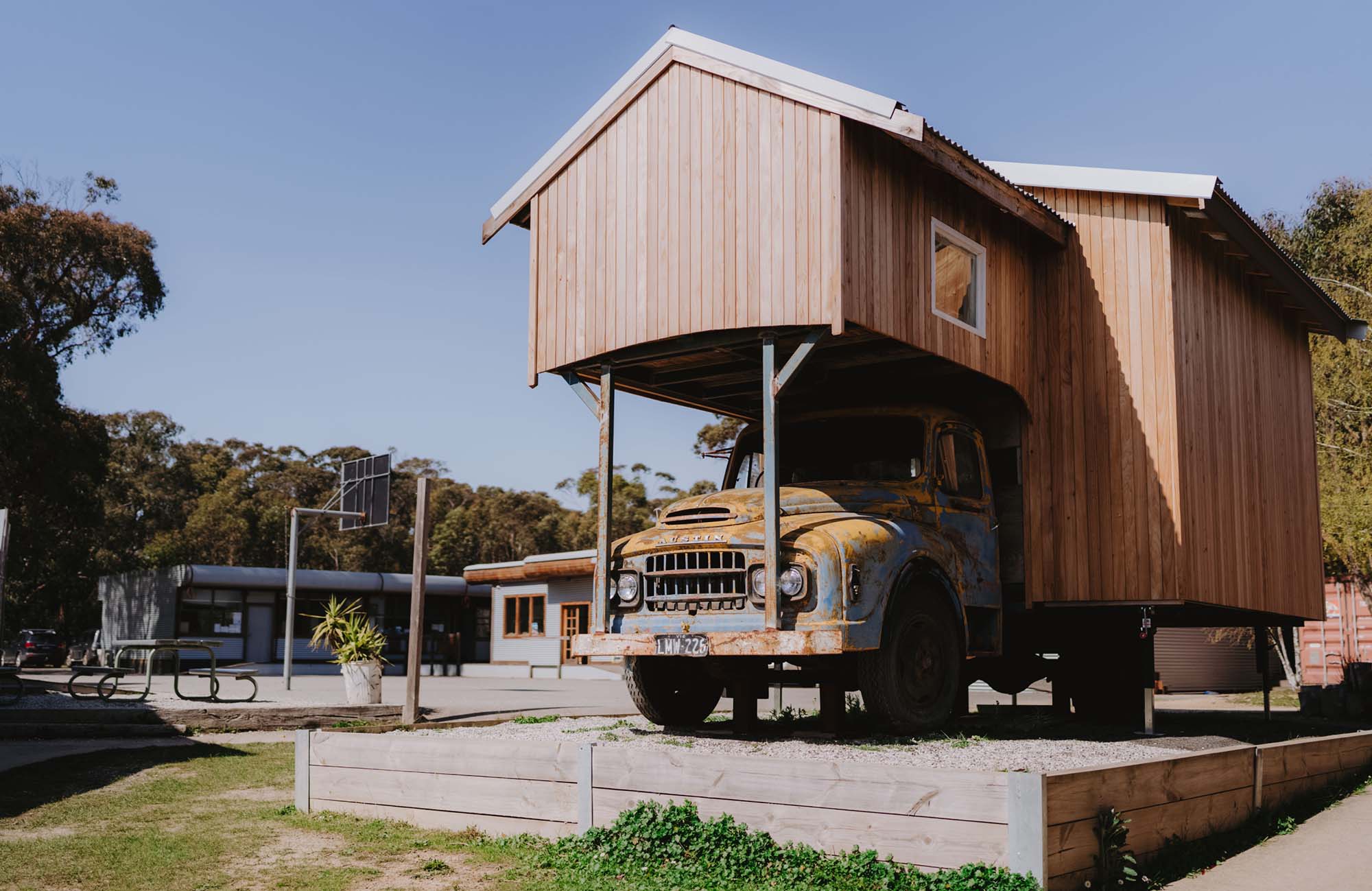
Alice Miller is an independent Year 7-12 school nestled below Mount Macedon and surrounded by bush. Founded in 2016 by author and educator John Marsden, the school builds on the successful model established at its sister school, Candlebark.
During 2023 and 2024, the Alice Miller Campus experienced recurring electrical outages resulting from high onsite energy demand and periods of broader grid instability. These conditions highlighted the site’s vulnerability to power disruptions.
In response, the campus established a clear objective to strengthen the sites energy resilience and reduce reliance on grid‑supplied electricity through the deployment of onsite renewable energy generation.
To meet these objectives, Alice Miller engaged 1Circle & School Procure to provide Planning and Procurement services for onsite renewable energy generation enabling consistent power supply through site blackouts.


Challenge
Achieving energy resilience requires careful planning to ensure the success. In this instance, resilience requires providing sufficient on-site generation and storage to:
- meet peak loads and therefore, avoid the need to turn off appliances and/or overload the main switchboard and cause loss of power to the campus e.g. trip the main circuit breaker
- enable seamless transition to self-generation during a grid outage
In practice, resilience planning requires assessment of a range of existing site constraints, infrastructure limitations, and future masterplan considerations to determine the capacity, function, and location of the solution. Considerations include:
- Gaining school insight into historical energy use and limits that were causing the campus to become overloaded and lose power
- Exposing the misalignment between solar generation and high winter energy use
- Selecting suitable buildings across a dispersed campus of small and medium‑sized structures
- Understanding electrical infrastructure limitations and connections on preferred buildings back to Main Switchboard
- Assessing Master plan impacts on proposed installation areas to mitigate the risk of having to relocate infrastructure
- Accounting for future development plans and expected growth in energy demand
- Incorporating additional safety requirements due to the school’s location in a bushfire zone, particularly for battery placement
Solution
1Circle partnered with School Procure to deliver a structured, end-to-end approach from planning, solution design, procurement to validate operational performance.
Key activities include:
- Conducting a detailed analysis of campus energy consumption, including peak demand periods, site grid connection constraints, and electricity costs to inform solution design
- Educating stakeholders on renewable energy generation options (solar and Battery Enabled Storage Systems) and the extent they may defer or avoid expensive grid connection upgrades
- Designing a solar system concept that is tailored to the school’s seasonal energy usage, peak load, building availability, master plan, and financial objectives.
- Managing a competitive procurement process using a structured Request for Proposal brief
- Providing a supplier recommendation by thoroughly analysing competitive responses and presenting evaluation reports comparing financial, technical, experience criteria to support confident decision-making
- Pre‑qualifying specialist installers to ensure technical and ongoing asset management capability
- Supporting contracting of the preferred supplier - an experienced, technically qualified local installer to ensure reliable delivery, compliance, and long term‑ support
- Oversee system implementation and provide technical advice through to practical completion.
Results
Energy Resilience & Emission Reduction
The solution successfully enabled continuous unrestricted operation through the 2025 winter season and further reduced emissions. More specifically, Alice Miller achieved:
- net emissions reduction by eliminating 40% of grid emissions
- electricity supply stability through onsite generation, protecting the school from unplanned outages
- reduced use of the existing diesel generator
- seamless transition to on-site generation at times of peak load (and/or outage) - previously there would be downtime before the diesel generation supplied the campus
- 40% electricity cost reduction
- School electricity firstly being supplied from onsite renewable sources before using the grid
- Demonstrable progress to the school’s sustainability and environmental commitments
For further information contact 1Circle